Business growth brings new opportunities, more customers, additional employees, and increased operational activities. However, as an organisation expands, managing its documents and business information can become increasingly complicated.
From customer agreements and invoices to employee records, financial reports, project files, and internal policies, growing businesses generate a significant volume of documents every day. When these documents are stored across different computers, email accounts, shared drives, and physical filing cabinets, maintaining proper organisation becomes difficult.
These challenges can affect employee productivity, document security, collaboration, and overall business efficiency.
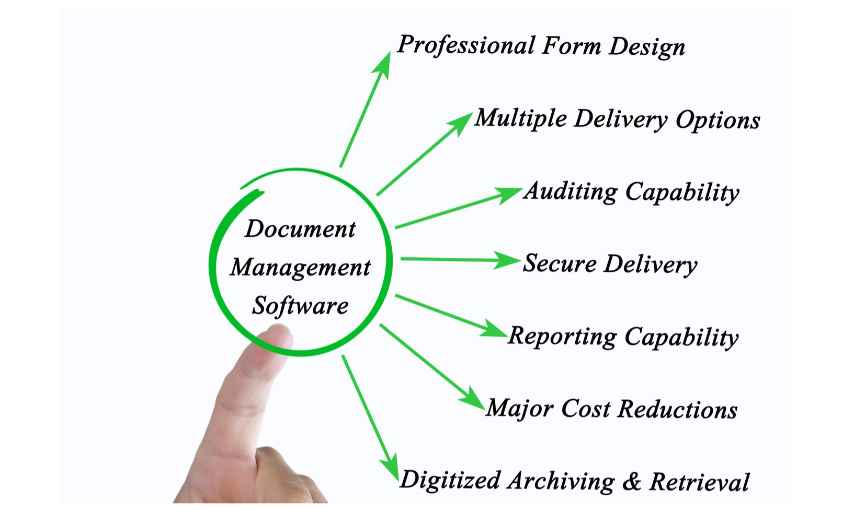
This is where Document Management Software (DMS) becomes valuable. It provides businesses with a centralised platform to store, organise, access, track, and manage documents throughout their lifecycle.
But what specific challenges can document management software solve for growing businesses? Let’s explore the common problems and how a DMS can help address them.
10 Common Document Management Challenges and How DMS Solves Them
1. Difficulty Finding Important Business Documents
As businesses grow, the number of documents they manage increases. Employees may need to search through multiple folders, email attachments, shared drives, or physical storage cabinets to find a particular file.
For example, finding an old customer agreement or financial invoice can become time-consuming when documents are not properly organised.
How DMS solves this challenge:
Document Management Software provides centralised storage and advanced search functionality. Employees can locate documents using keywords, file names, document numbers, metadata, and other search filters.
A structured classification system also makes it easier to organise files according to departments, customers, projects, and document categories.
This reduces unnecessary searching and helps employees access important information faster.
2. Scattered Documents Across Multiple Locations
Many growing organisations store their documents in different locations. One department may use local computer storage, another may rely on cloud drives, while employees share important files through email.
This creates information silos and makes it difficult to maintain a consistent document management process.
How DMS solves this challenge:
A centralised DMS brings business documents together within one organised repository.
Authorised employees can access relevant files through a common platform rather than depending on multiple storage locations.
Businesses can also establish department-specific folders and document categories while maintaining centralised control.
This improves information accessibility and helps departments work with a more consistent source of business documents.
3. Duplicate Files and Document Version Confusion
When several employees work on the same document, multiple versions can quickly appear.
For example, a manager may update a project proposal and send it to the team. Another employee might continue working on an older copy, resulting in conflicting information.
This can lead to mistakes, duplicated work, and unnecessary communication.
How DMS solves this challenge:
Document Management Software with version control helps businesses maintain a history of document revisions.
Employees can identify the latest version, review previous changes, and understand how a document has been updated.
Depending on the platform, version control may also allow authorised users to restore earlier versions when necessary.
This improves document accuracy and reduces confusion when multiple employees collaborate on the same files.
4. Slow Document Approval Processes
Growing businesses often handle documents that require approval from multiple employees or departments.
Purchase orders, invoices, contracts, employee requests, and business proposals may need several levels of review before they can be finalised.
When these processes depend entirely on emails and manual follow-ups, approvals can become delayed.
How DMS solves this challenge:
Workflow automation helps organisations create structured document approval processes.
Documents can be automatically routed to the appropriate employees based on predefined rules.
For example, an invoice may move from the accounts team to the finance manager for review and approval.
Employees can track pending approvals, receive notifications, and review documents through the system.
This reduces manual coordination and helps businesses manage document-related processes more efficiently.
5. Increasing Document Security Risks
As businesses expand, more employees, departments, and external stakeholders may need access to business information.
Without proper access controls, confidential documents may be shared with unauthorised individuals or accessed by employees who do not require them.
This can create risks involving financial information, customer records, employee details, and business agreements.
How DMS solves this challenge:
A DMS provides security features that help businesses control document access.
Administrators can assign permissions according to employee roles and responsibilities.
For example:
- HR employees can access authorised employee records.
- Finance teams can manage financial documents.
- Department managers can review relevant business reports.
- General employees can access documents required for their work.
Additional features such as encryption, secure authentication, and audit trails can provide further protection.
These controls help organisations maintain better visibility and control over sensitive business information.
6. Poor Collaboration Between Departments
As an organisation grows, different departments often need to work together on shared documents and business processes.
However, when documents are stored in separate systems, employees may struggle to share updated information.
For example, the sales department may need a customer contract that is maintained by the legal team. If accessing the document requires multiple emails and manual requests, collaboration becomes slower.
How DMS solves this challenge:
Document Management Software creates a shared environment where authorised employees can access and collaborate on documents.
Depending on the system, teams can share files, review updates, add comments, and track document changes.
This improves communication between departments and reduces unnecessary file transfers.
It also helps employees work with more consistent and up-to-date information.
7. Difficulty Managing Remote and Hybrid Teams
Modern businesses increasingly employ people who work from different offices, cities, and locations.
Traditional paper-based document management can make it difficult for remote employees to access important records or participate in document approval processes.
How DMS solves this challenge:
Cloud-enabled Document Management Software allows authorised employees to access documents remotely through supported devices and secure connections.
Team members can retrieve files, review documents, and participate in approval workflows without needing to be physically present in the office.
This supports flexible working arrangements and helps businesses maintain continuity across different locations.
8. Rising Paperwork and Administrative Costs
As businesses grow, they often need to manage increasing amounts of paperwork.
Printing, photocopying, physical storage, filing, and document transportation can create additional operational expenses.
Manual document handling also requires employee time that could otherwise be spent on more valuable activities.
How DMS solves this challenge:
A DMS helps organisations move towards digital document management.
Businesses can store electronic documents, digitise physical records, and automate repetitive document-related activities.
This can reduce expenses associated with:
- Paper and printing supplies.
- Physical filing cabinets and storage space.
- Manual document handling.
- Document transportation.
- Administrative activities.
Moving towards paperless processes can help businesses manage increasing document volumes more efficiently.
9. Difficulty Maintaining Compliance and Audit Records
Growing businesses may need to follow industry regulations, internal policies, and document retention requirements.
Maintaining accurate records becomes more challenging when documents are spread across multiple locations and there is limited visibility into who accessed or modified them.
How DMS solves this challenge:
Document Management Software can provide audit trails, access histories, version records, document retention features, and approval logs.
These capabilities help organisations monitor document activities and retrieve relevant records when required.
For example, a business can review the history of a contract to understand when it was updated and who approved a particular version.
However, software alone does not guarantee regulatory compliance. Businesses must configure their document management processes according to applicable legal and industry requirements.
10. Difficulty Scaling Document Management Operations
A document management process that works for a small team may become inefficient when a business expands.
More employees, customers, suppliers, and projects create additional documents that need to be organised and managed.
Without a structured system, businesses may experience storage limitations, duplicated files, inconsistent naming conventions, and increasing administrative workloads.
How DMS solves this challenge:
Document Management Software provides a more scalable approach to handling business information.
Organisations can introduce additional users, departments, document categories, storage capacity, and automated workflows as their requirements change.
A scalable DMS helps businesses maintain organised document management practices while supporting future growth.
Signs Your Growing Business Needs Document Management Software
Not every business immediately recognises when its existing document management process is becoming inefficient.
However, the following signs may indicate that it is time to consider implementing a DMS:
- Employees frequently struggle to find important files.
- Multiple versions of the same document exist.
- Documents are scattered across different storage locations.
- Approval processes depend heavily on email communication.
- Confidential files lack proper access restrictions.
- Employees regularly request documents from other departments.
- Physical paperwork is increasing.
- Remote employees have difficulty accessing business records.
- Maintaining audit records and document histories is challenging.
- Administrative workloads are increasing as the business grows.
If your organisation experiences several of these challenges, a centralised document management solution may help improve everyday operations.
What Should Businesses Look for in Document Management Software?
Before choosing a DMS, growing businesses should evaluate the features that support their operational requirements.
Important capabilities include:
- Centralised Document Storage: Keeps business files organised in one location.
- Advanced Search: Helps employees retrieve documents quickly.
- Version Control: Maintains document revision history.
- Workflow Automation: Simplifies document approvals and routing.
- Access Control: Protects confidential information through user permissions.
- Audit Trails: Tracks document activities and changes.
- Cloud Accessibility: Supports remote document access.
- Integration: Connects with existing business applications.
- Backup and Recovery: Helps protect important business records.
- Reporting: Provides visibility into document management activities.
The right software should be easy to use, secure, scalable, and capable of supporting your organisation’s current and future requirements.
Conclusion
Growing businesses need more than additional storage space to manage their increasing volume of documents. They need an organised system that improves accessibility, security, collaboration, and document control.
From misplaced files and duplicate documents to slow approval processes and increasing administrative costs, Document Management Software can help address many common operational challenges.
By implementing a centralised DMS, organisations can simplify document handling, automate repetitive tasks, improve employee productivity, and establish more consistent business processes.
Ready to improve how your organisation manages documents? Explore Pericent’s docEdge DMS to discover how centralised storage, document tracking, and workflow automation can help your business manage information more efficiently.