
Artificial Intelligence is everywhere.
From boardroom discussions to LinkedIn posts, every business today is asking the same question:
“How do we implement AI?”
But here’s the uncomfortable truth. Most businesses are not ready for AI.
Not because they lack ambition. Not because AI tools are too complex.
But because of a hidden foundational problem that almost no one talks about.
The Illusion of AI Readiness
Many companies believe they are ready for AI because they have:
- Digital tools
- Cloud storage
- CRM or ERP systems
- Large volumes of data
On the surface, this looks promising.
But when AI projects actually begin, they fail; quietly, slowly, and expensively.
Why?
Because AI doesn’t just need data. It needs structured, usable, and connected data.
The Real Problem: Unstructured Chaos
Inside most organizations, critical business information is scattered everywhere:
- Contracts sitting in email threads
- Invoices stored in shared drives
- Compliance documents in PDFs and WhatsApp chats
- Approvals happening through calls and informal messages
This creates two major issues:
1. Documents Are Not AI-Ready
AI cannot “understand” random files spread across systems.
If your documents are:
- Not digitized properly
- Not classified
- Not searchable
Then AI has nothing reliable to work with.
2. Processes Are Invisible
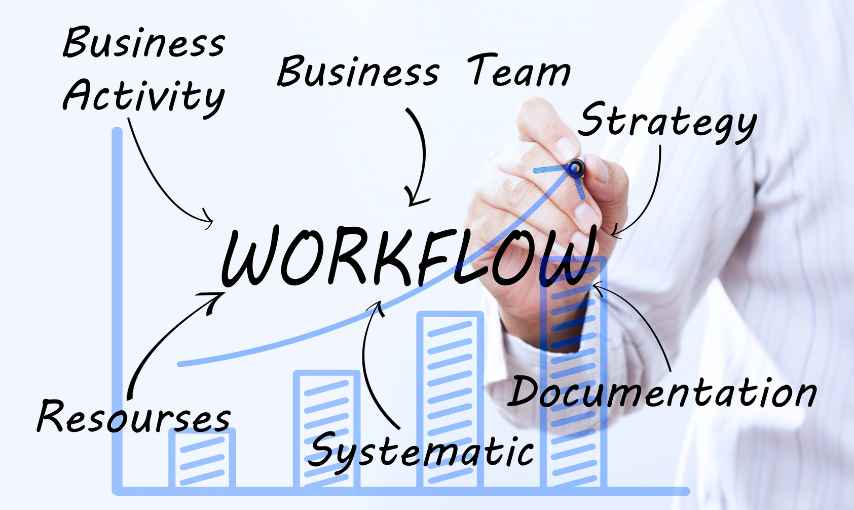
Even more critical, your workflows are not defined.
Think about it:
- How does an invoice get approved?
- What happens when there’s an exception?
- Who escalates delays?
In many companies, the answers live in people’s heads, not in systems.
This means:
👉 No visibility
👉 No consistency
👉 No automation
And without structured processes, AI cannot act.
Why AI Fails Before It Even Starts
Most AI initiatives don’t fail because of bad models.
They fail because:
- Data is messy
- Processes are undefined
- Systems are disconnected
In fact, industry research shows that the majority of AI failures happen at the data and process layer, not the AI layer.
So while businesses invest in:
- AI tools
- Chatbots
- Automation platforms
They ignore the foundation required to make AI work.
What AI Actually Needs to Succeed
For AI to deliver real business value, it needs two things:
1. A Document Intelligence Layer
Your documents must be:
- Digitized
- Classified
- Searchable
- Secure and compliant
This allows AI to:
- Extract key information
- Identify patterns
- Trigger actions
Without this, documents remain dead data.
2. A Process Automation Layer
Your workflows must be:
- Clearly defined
- Digitally modeled
- Automated with rules and logic
This enables AI to:
- Make decisions
- Route tasks
- Escalate issues
- Monitor performance
Without processes, AI has no direction.
The Shift: From AI Tools to AI Infrastructure
Most businesses are buying AI tools.
Smart businesses are building AI infrastructure.
This shift changes everything.
Instead of asking:
👉 “Which AI tool should we use?”
You start asking:
👉 “Is our business ready for AI to operate?”
Because AI is not just a feature, it’s a system that needs a strong foundation.
What Happens When You Fix the Foundation
Once your documents and processes are structured, AI becomes powerful.
Suddenly, you can:
🔹 Automate Document Work
- Extract contract terms automatically
- Process invoices without manual entry
- Prepare audit documents instantly
🔹 Run Intelligent Workflows
- Automate approvals and escalations
- Monitor SLAs in real-time
- Predict delays before they happen
🔹 Deploy AI Agents That Actually Work
- Compliance monitoring agents
- Vendor onboarding automation
- HR and finance workflow assistants
This is where AI shifts from hype to impact.
The Business Impact
When the foundation is in place, the results are measurable:
- Significant reduction in manual work
- Faster process execution
- Improved compliance and audit readiness
- Better decision-making with real-time insights
Most importantly, AI starts delivering real ROI, not just experiments.
The 90-Day Path to AI Readiness
Becoming AI-ready doesn’t take years.
It requires the right approach.
Phase 1: Organize Your Documents
- Centralize all business documents
- Apply classification and search capabilities
- Ensure compliance and access control
Phase 2: Digitize Your Processes
- Map key workflows
- Define rules, approvals, and escalations
- Automate repetitive steps
Phase 3: Activate AI
- Introduce AI agents on top of structured systems
- Start with high-impact use cases
- Continuously improve with data
Final Thought: AI is Not Magic, It’s Infrastructure
AI is powerful.
But it is not magic.
It cannot fix:
- Disorganized data
- Broken workflows
- Manual processes
If your foundation is weak, AI will fail, no matter how advanced the technology.
But if your foundation is strong, AI can transform your business faster than you think.
Ready to Unlock Real AI?
Before investing in another AI tool, ask yourself:
👉 Are your documents AI-ready?
👉 Are your processes structured and automated?
Because the hidden reason your business isn’t ready for AI…
is not AI itself.
It’s everything underneath it.
This is where docEdge and bpmEdge make the difference.
- docEdge transforms your documents into structured, searchable, and AI-ready data
- bpmEdge turns your workflows into automated, intelligent, and auditable processes
Together, they create the foundation layer AI actually needs, so your AI initiatives don’t just start… they succeed.
Because real AI doesn’t begin with tools. It begins with the right infrastructure.